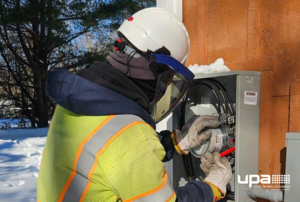

Every day, long before a job site is active, UPA crews are already on the road, traveling through residential neighborhoods, active construction zones, and shared public roads to do work that keeps communities running. For UPA, the drive to the job carries the same standard as the job itself, and that commitment runs through every level of the organization.
At the scale UPA operates, thousands of those trips happen every month, and the people sharing those roads deserve the same standard of care and professionalism our crews bring to every project they’re trusted to complete. Ensuring our employees travel safely to and from each job is a commitment this company takes seriously. Every UPA vehicle is equipped with fleet safety technology that identifies driving behaviors in real time, automates personalized training, and delivers actionable insights to management, giving our certified safety trainers the data and tools they need to coach effectively at scale.
Driver Safety Metrics and Performance Data
This past March, UPA logged 1.2 million miles. Driver safety scores were tracked across real driving behaviors with all field divisions performing consistently in the top tier of the scale. Since implementing the program in 2024, UPA has committed to building its safety operations around data-driven decisions, using real-time insights to drive accountability, elevate driver scores, and reduce at-risk behavior across the fleet. Those results reflect a workforce committed to a culture of safety and a leadership team that has invested in the infrastructure to support it.
AI-driven training modules personalize the coaching experience for each driver, increasing the effectiveness of instruction, reducing risky behavior over time, and decreasing the need for in-person intervention. All coaching is triggered by recorded behavior and completed within 24 hours of the event, keeping feedback timely and directly connected to what happened on the road. While much of the process is automated, supervisors and trainers review AI-generated recommendations to ensure coaching actions are fair and appropriate, and grounded in the full context of each case.
How Fleet Safety Technology Improves Driver Behavior
UPA uses fleet safety technology to monitor the behaviors most directly linked to accidents, including rolling stops, harsh braking, mobile device use behind the wheel, drowsy driving, and inattentive behavior. Having that visibility means the safety team can identify patterns early and respond with specifics before a situation has the chance to escalate.
The program supports a full range of coaching methods, giving safety trainers the flexibility to meet drivers where they are. All UPA safety trainers are certified through recognized industry organizations, including AAA Defensive Driving, ensuring the program reflects current best practices and meets rigorous certification standards. Depending on the behavior and the individual, coaching may be delivered in the field, one-on-one, in a group classroom setting, or through virtual sessions. Follow-up coaching tracks improvement after an initial intervention. Preventative coaching addresses emerging trends before they become incidents. Recognition coaching reinforces and encourages the behaviors the program is designed to build. Each method has its place, and the safety team draws from the full set based on what the situation calls for.
UPA’s Tiered Driver Coaching Program
UPA’s driver safety program is built on a structured, tiered response model. The level of intervention is determined by the severity of a behavior and whether it is a first or repeat occurrence, ensuring every response is proportionate and documented.
- Critical behaviors: Triggers direct supervisor intervention starting with the first offense.
- High-risk behaviors: Triggers AI-assisted training and supervisor intervention.
- Mid-level behaviors: Triggers AI-assisted training and escalates to supervisor coaching based on frequency.
- Lower-severity behaviors: Triggers a self-review facilitated by AI and escalates to supervisor coaching based on frequency.
For the driver, the program delivers something equally valuable. Real-time insights mean feedback is immediate, specific, and tied directly to a recorded event rather than a general observation weeks after the fact. Every person in the fleet is working from the same data and supported by the same tools. That shared accountability matters on a crew where everyone’s safety is connected to the person next to them.
Driving for UPA means being part of something larger than a single route or a single job. Every driver plays a role in how this company shows up, and every driver deserves to go home the same way they came in.
Why Driver Safety Matters in Utility Operations
UPA crews work in people’s neighborhoods. They travel the same roads as the families, commuters, and utility customers who depend on the infrastructure being built and maintained. The work itself is visible and the responsibility is real, extending well beyond the boundaries of any single job site.
For utility operations specifically, the stakes of driver safety are compounded by the nature of the work. Crews are moving between locations continuously, often in heavy vehicles carrying equipment through active residential and commercial areas. The margin for error is the same whether a crew is on site or in route, and UPA’s program is built on that understanding. Safety begins the moment a driver gets behind the wheel, not when they arrive on site.
A strong driver safety program produces measurable operational results. Fewer incidents mean more consistent project delivery and stronger client relationships. It also means a workforce that shows up every day healthy, focused, and ready to do the job. At UPA, data-driven safety decisions are how the company protects its people and earns the trust of the communities it serves.
To learn more about UPA’s approach to safety, visit our safety page.
About the Director of Safety
Jeremy Byers serves as Director of Safety at Utility Partners of America, bringing 11 years of experience with the organization to the role he assumed in 2025. He leads the company’s safety programs across all divisions and field operations. During his tenure, UPA has enhanced its driver safety program, supporting active drivers across multiple geographies, setting a standard that reflects the company’s commitment to its crews and the communities they serve.